Red Winds, Coral Worlds
Opening May 20, 2026, ‘Red Wind, Coral Worlds’ is an upcoming exhibition curated by recipients of the Art Jameel Curatorial Open Call, Huda Tayob and Miriam Hillawi Abraham.
20 MAY 2026 - 26 OCTOBER 2026
![]()
Red Winds, Coral Worlds sites the Red Sea within an expanded and interconnected oceanic terrain. The exhibition traces the entangled worlds that converge across its waters, attending to the material and affective remnants left in the wake of centuries of movement and migration shaped by trade, pilgrimage, and displacement.
The works in the exhibition act as navigational systems – maps that negotiate arrival and loss, and offerings that recall forgotten pasts. Drawing on familial and communal archives, they speak to ongoing waves of disruption and continuity. Coastal currents carry worlds: from the coral and mangrove shores binding Jeddah to Suakin, as part of a wider constellation of east African and Indian Ocean coral cities; to the north trade winds traversing the Sahara; and the red winds from Ethiopia which sweep across the Arabian Gulf and Strait of Hormuz, carrying sediment and songs. In the exhibition, trade, pilgrimage, enslavement and scholarly exchange converge in the scent of cloves, shifting practices of Zar, the stain of henna, utterances in poetry, and in the oceanic and coastal terrains that hold and transmit memory. These works understand the Red Sea as part of an expansive network of exchange and relation, bound through ecological and social currents.
Working across materiality and scale, the exhibition holds space through scent, texture, residue, and sound. Artworks are placed in conversation with historical and found objects, inviting a shift in attention, a simultaneous attunement to the contemporary and the ancestral, the everyday, the ceremonial and oceanic. Moving across coastal shores and coral worlds, the works in the exhibition ask how, through an attention to what is carried by wind and seas, we might engage with the absent present.
Artists include: Abeer Sultan, Ameena Aljerman Al Ali, Basmah Felemban, Dima Srouji, Gouled Ahmed and Asmaa Jama, Hashim Nasr, Henok Melkamzer, Hoda Afshar, Hussein Shariffe, Joseph Kamaru, Madiha Sikander, Mustafa Saeed, Myriam Omar Awadi, Rund Alarabi, Sara Abdu, Sarah Al Abdali, and Shiraz Bayjoo.
-
VEILANCE
S27 Paris Showroom
Installation by NEW TENDENCY & Studio Lilo
Sound Design by KMRU
Jun 24, 2026 - Jun 27, 2026
![]()
Victoria, Australia
20 June - 26 July 2026
JOSEPH KAMARU
Temporary Stored, 2022
print, audio soundtrack
50:09mins, looped
![]()
-
Chasing Tails presents as an uncompromising exploration of boundaries: experimental and experiential processes with which artists enquire into the functioning of growth and decay through sustainability and extinction, war and politics, customs and future tech, and the archaeology of time. It features artists who wrestle control of their subject to make sense of contemporary positions, works that balance on the verge of integration and contrast, works that retain autonomy, but as a collective, sharpen our thinking about the agency we hold as a species. It acts as a present-day social laboratory where art reveals our encounters, from the birth of stars to our entanglements with external realities, inextricably tying us to place, and putting to bed any illusion that we can separate ourselves from the past and the future, for we are a small part of a much greater whole.
Chasing Tails features the work of globally respected artists Fabian Knecht (Germany), Sofie Muller (Belgium), Nicolás Lamas (Peru) and Joseph Kamaru (Nairobi), alongside those by local and national artists Sam Doctor, Jackson Farley, Yhonnie Scarce, Charlie Sofo and Kate Stevens. Their coming together creates a vital exchange of ideas, perspectives, and practices within a regional setting—nurturing community discourse and artistic ambition beyond metropolitan centres.

Red Winds, Coral Worlds sites the Red Sea within an expanded and interconnected oceanic terrain. The exhibition traces the entangled worlds that converge across its waters, attending to the material and affective remnants left in the wake of centuries of movement and migration shaped by trade, pilgrimage, and displacement.
The works in the exhibition act as navigational systems – maps that negotiate arrival and loss, and offerings that recall forgotten pasts. Drawing on familial and communal archives, they speak to ongoing waves of disruption and continuity. Coastal currents carry worlds: from the coral and mangrove shores binding Jeddah to Suakin, as part of a wider constellation of east African and Indian Ocean coral cities; to the north trade winds traversing the Sahara; and the red winds from Ethiopia which sweep across the Arabian Gulf and Strait of Hormuz, carrying sediment and songs. In the exhibition, trade, pilgrimage, enslavement and scholarly exchange converge in the scent of cloves, shifting practices of Zar, the stain of henna, utterances in poetry, and in the oceanic and coastal terrains that hold and transmit memory. These works understand the Red Sea as part of an expansive network of exchange and relation, bound through ecological and social currents.
Working across materiality and scale, the exhibition holds space through scent, texture, residue, and sound. Artworks are placed in conversation with historical and found objects, inviting a shift in attention, a simultaneous attunement to the contemporary and the ancestral, the everyday, the ceremonial and oceanic. Moving across coastal shores and coral worlds, the works in the exhibition ask how, through an attention to what is carried by wind and seas, we might engage with the absent present.
Artists include: Abeer Sultan, Ameena Aljerman Al Ali, Basmah Felemban, Dima Srouji, Gouled Ahmed and Asmaa Jama, Hashim Nasr, Henok Melkamzer, Hoda Afshar, Hussein Shariffe, Joseph Kamaru, Madiha Sikander, Mustafa Saeed, Myriam Omar Awadi, Rund Alarabi, Sara Abdu, Sarah Al Abdali, and Shiraz Bayjoo.
-
VEILANCE
S27 Paris Showroom
Installation by NEW TENDENCY & Studio Lilo
Sound Design by KMRU
Jun 24, 2026 - Jun 27, 2026

Chasing Tails
Stockroom KynetonVictoria, Australia
20 June - 26 July 2026
JOSEPH KAMARU
Temporary Stored, 2022
print, audio soundtrack
50:09mins, looped

-
Chasing Tails presents as an uncompromising exploration of boundaries: experimental and experiential processes with which artists enquire into the functioning of growth and decay through sustainability and extinction, war and politics, customs and future tech, and the archaeology of time. It features artists who wrestle control of their subject to make sense of contemporary positions, works that balance on the verge of integration and contrast, works that retain autonomy, but as a collective, sharpen our thinking about the agency we hold as a species. It acts as a present-day social laboratory where art reveals our encounters, from the birth of stars to our entanglements with external realities, inextricably tying us to place, and putting to bed any illusion that we can separate ourselves from the past and the future, for we are a small part of a much greater whole.
Chasing Tails features the work of globally respected artists Fabian Knecht (Germany), Sofie Muller (Belgium), Nicolás Lamas (Peru) and Joseph Kamaru (Nairobi), alongside those by local and national artists Sam Doctor, Jackson Farley, Yhonnie Scarce, Charlie Sofo and Kate Stevens. Their coming together creates a vital exchange of ideas, perspectives, and practices within a regional setting—nurturing community discourse and artistic ambition beyond metropolitan centres.
-
FOLDS (in tape fields)
Düsseldorf - 16.04.2026 - 06.05.2026FOLDS (in tape fields) is a cooperation between Kunsthalle Düsseldorf and IMAI – Inter Media Art Institute, realised as part of IMAI’s biennial exhibition project Circulation Copies on screens and loudspeaker systems throughout Düsseldorf’s urban space.
KMRU explores how urban infrastructures condition and shape listening in public space. Working with listening walks, detours and incidental recordings, he approaches Düsseldorf as an auditory field in which routines, rhythms and expectations overlap and intersect.
FOLDS (in tape fields) unfolds across multiple sites and loudspeaker systems throughout the city. Sound-based motifs, loops and field recordings can be heard at staggered intervals and recur without forming a closed whole. Time is stretched, interrupted or folded back on itself. Meaning emerges in passing by, in lingering, or equally through what goes overheard. Rather than offering a fixed cartography, the work opens out to expansive, layered modes of perception.
....
Circulating Copies is a biennial exhibition project of the IMAI – Inter Media Art Institute, taking place on screens and sound systems across the city of Düsseldorf. Audiovisual media interfaces are a ubiquitous part of everyday life here, but they are rarely perceived as structures that can be played with or changed. This second edition of the project is dedicated to how these infrastructures organise, negotiate and reflect how we see and hear in public space.
FOLDS I & II


 ‘
‘Photo courtesy of the artist and IMAI - Inter Media Art Institute, photo: Kai Werner Schmidt, 2026.
-
Float- a wind of time
4-channel sound, net, scent, and photographs.2026
(Colombo: 21 - 31 January 2026)

commissioned by Colomboscope 2026.
Supported by Goethe-Institut Srilanka & TBA-21 Academy.
Float- a Wind of Time (2026) is a radiophonic sound work emerging from KMRU’s ongoing research on port cities, the island of Fiji and more recently, Lamu in Kenya, developed during the residency: Mangrove Ecologies: Life Between Ebb & Flow. Here, the mangrove becomes both a metaphor and methodology— a porous frame for exploring the intertidal rhythms of coastal ecologies where land and ocean continually negotiate time and human presence.
Stored ?
Joseph Kamaru /KMRUMunyu Space, Nairobi, Kenya - Feb 23- Feb 28, 2026

Stored?
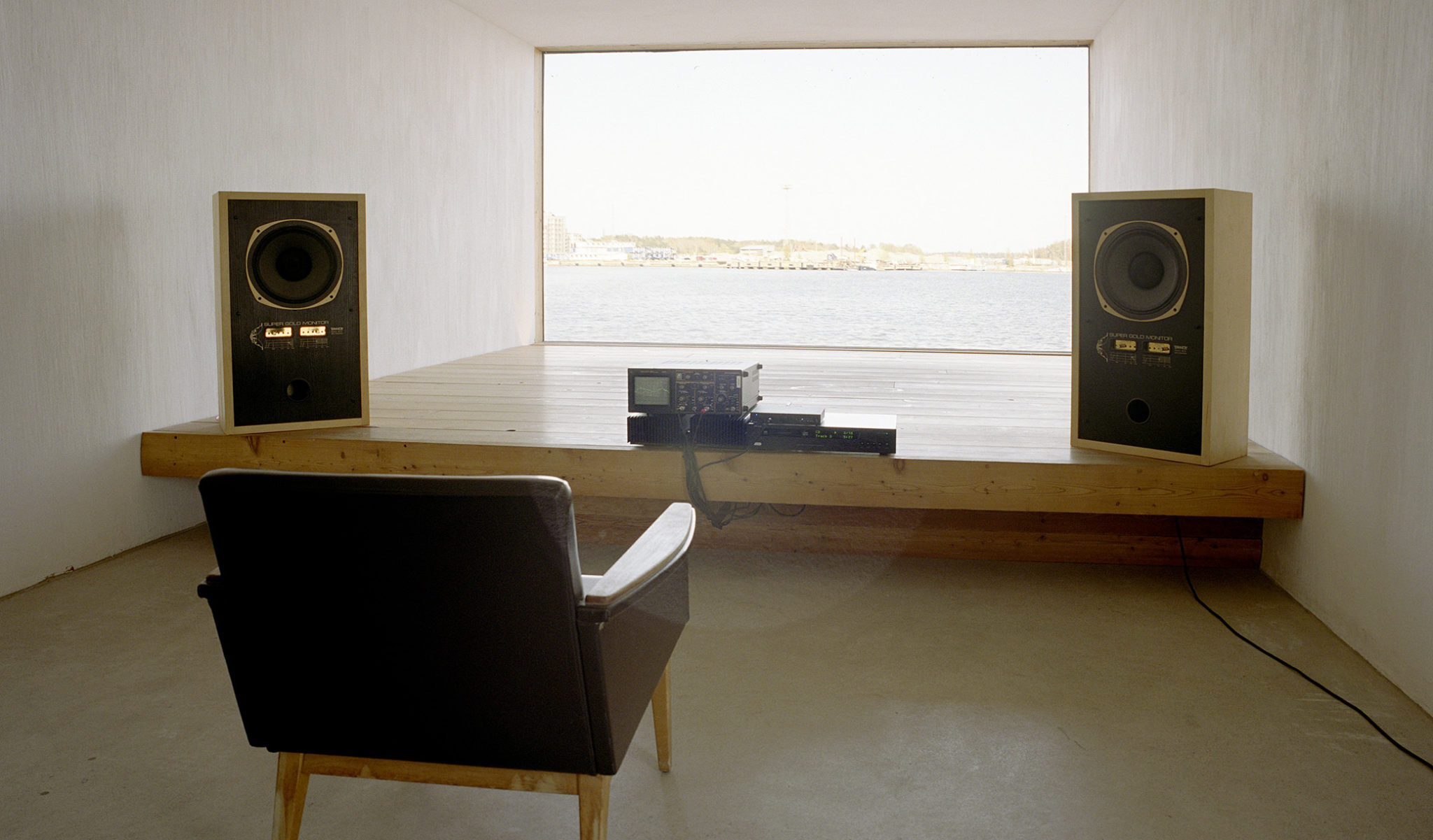
African countries' heritage has been taken from their natural surroundings, tangible artefacts, statues, recordings, and objects through colonial violence. Similarly, the intangible, ephemera (sounds, field recordings and folklore) were extorted and exported, and stored in these museums. Stored? is a repatriation-dialogue-project which questions the significance of sound archives in museums using selected sounds from an archive from the Sound Archive of the Royal Museum of Central Africa (Belgium).
The prints on the wall reinterpret problematic cataloguing of the archival recordings, concurrently offering possible hints of blurriness often associated with archival recordings in the Occident. The interpreted pieces of Temporary Stored II focus on narratives through different sounds from the archive, field recordings, and synthesizers, reconfiguring ways of thinking sonically through archival waveforms, recorded pasts (and futures). Listening back is a continuous process of reassessing what has been lost, captured and refused.
Audio reinterpretations by: KMRU, Aho Ssan, Jessica Ekomane, Lamin Fofana, Nyokabi Kariũki, Bhavisha Panchia (Text)
-
Museum of Sound
A listening installation dedicated to Mika Vainio, 11 November - 30 November 2025The installation invites you to let the noise of the outside world fade away and make space for sound’s rhythm and resonance. It features selected works by Mika Vainio alongside playlists curated by Danish and international artists connected to his sonic universe. More info about artists here.
Buai 44:44
transmediale 2026Field Recordings, Quadraphonic
44:44’

The conscious self sits in the driver's seat, hands on the wheel, in control, while the subconscious, the other passenger, gives directions, whispering through intuition and impulse. When the buai (betel nut) hits the body, the road changes, visions sharpen, some pathways unfold, and new roads emerge, nudging the subconscious forward, drifting in half high states, witnessing mystery. There is no fixed geography; the terrain becomes once you allow the self to cross it, awakening the territories through the velocity of gliding speeds.
Buai 44:44 is a durational field recording drive that emerges from a paradox of motion loops in the highlands of Simbu in Papua New Guinea (PNG). A sensation felt and listened to through a series of events unfolding in fluctuations and extreme unpredictability. Where a land's slowness imbues a mystery, doubling and waiting while improvisation becomes a maker of navigation, seeing and listening. The roads aren’t important, but movement is. The listener becomes the passenger carried by the loop rhythms, delaying listening to render what might happen in the future and moving back to move forward.
There is a subtle euphoria, a restless alertness. The self becomes both the driver and the passenger. Buai 44:44 acts less as a substance and more as a metaphor for crossing thresholds and letting drift guide the way. Sonic gestures that aren’t representations but are artefacts of transits, like passing headlights. At its core, the piece asks how the unheard becomes felt, how events, people, and processes with no explainable threads connect in strange ways. Where subtle euphorias of heightened awareness, rhythms of unresolved thoughts, and soft disorientations of sound states become a metaphorical accelerator of listening, where the subconscious becomes audible, not as meaning but as movement.
Mangrove Ecologies presents Radio Mikoko+
Public exhibition in the Botanical Garden of the University of Basel
June 16-21, 2025

Presented as a public activation during Art Basel 2025, this sound installation transforms the Viktoriahaus of the University of Basel into a listening garden shaped by ecological research and translocal exchange.
Mangrove Ecologies is an interdisciplinary exhibition that explores mangroves as both fascinating biotopes and living metaphors. Bringing together artists, scientists, artisans, designers, and technologists, the project explores how the complex intelligence of ecological systems can lead to a reciprocal, rhizomatic, and interconnected way of life—thus shaping planetary diplomacy.
The exhibition's focus is Radio Mikoko+ ("mikoko" means mangroves in Swahili), a multisensory installation developed over nine months (August 2024 - June 2025) by the artists David Muiruri (KE), Joseph Kamaru (KE), Ann Mbuti (CH/GER), and Yassine Rachidi (CH/MAR). Drawing on narratives, field recordings, material experiments, and cartographic research, the work takes visitors on a sonic and sensory journey from the island of Lamu to Basel.
The exhibition is the result of extensive research on the island of Lamu, a place shaped by centuries of cultural movement and encounters. Here, the idea of "otherness" emerges not as a dislocation or a sign of exoticism, but as a multifaceted sense of belonging that transcends fixed boundaries. Visitors are invited to enter the humid embrace of Victoria House in the Botanical Gardens, where the installation activates the senses through the humidity of the air, the sight of mangrove creatures, and the multilayered soundscapes from Lamu, which echo the ebb and flow of the tides.
++
Afrosonica - Paysages sonores / Soundscapes
MEG Museum, Geneva
May 16th, 2025 - Jan 4, 2026
MEG, the Geneva’s Museum of Ethnography, is delighted to announce its upcoming exhibition, Afrosonica - Soundscapes, opening on May 16, 2025. This immersive sound exhibition explores the role of music and sound in African societies and their diasporas. Through a selection of instruments, sound archives and contemporary installations, the exhibition highlights the power of sound and music to broader perspectives, evoke the present moment, communicate, foster connections between humans and non-humans, convey knowledge and emotions, and preserve memories.
Afrosonica - Soundscapes illuminates the transformative power of sound as a tool for memory, connection and change. The exhibition represents a new chapter for MEG, offering a museography rooted in a sensory approach, with a central focus on sound perception and the act of listening.
Co-curators : Madeleine Leclair, curator at MEG, and Ntshepe Tsekere Bopape (Mo Laudi), artist
Scientific advisor : Mathias Liengme, MEG
Featuring works by : Tarek Atoui, Rohan Ayinde and Tayo Rapoport, Sammy Balojiet David Nadeau-Bernatchez, Elena Bertuzzi, Ntshepe Tsekere Bopape (Mo Laudi), Sonia Boyce, Simnikiwe Buhlungu, DJ Lynnée Denise, Ahmed Essyad, Em’kal Eyongakpa, Hamadoun Kassogué, KMRU, Evita Koné, Mansara and Amaury Voslion, Luca Mazzaferri, Elsa M’Bala, Yara Mekawei, Trinity Mesimé Njume-Ebong, aja monet, Bocar Niang, Nicolas Repac, Reda Sayagh, Jürgen Schadeberg, Segen, Wasulu Selecta, Bintou Simporé, Penny Siopis, Binetou Sylla, Midori Takada, Laëtycia Vumuka.
The exhibition also features installations focused on the voice of masks, meditative music for lamellophones, and music associated with Vodoun and Afrosonica Sufi cultures.

Depot
courtesy of KMRU
https://podcasts.nova.fr/radio-nova-afrosonica-paysages-sonores/202510161213-de-nouvelles-grammaires-musicales-avec-joseph-kamaru
Oceanic Refractions
Immersive installation
>> Biennale Architettura 2025
To propose solutions to the crises we face, we must begin by listening. But how do we listen beyond words? How can we attune to the unspoken—the silences that hold meaning, the ocean that speaks in rhythms and reverberations? Oceanic Refractions invites immersion in the landscapes and seascapes of Oceania, shifting listening from an extractive act to a reciprocal practice, encouraging solidarity and interdependent ways of being with the world.
![]()
installation as interruption
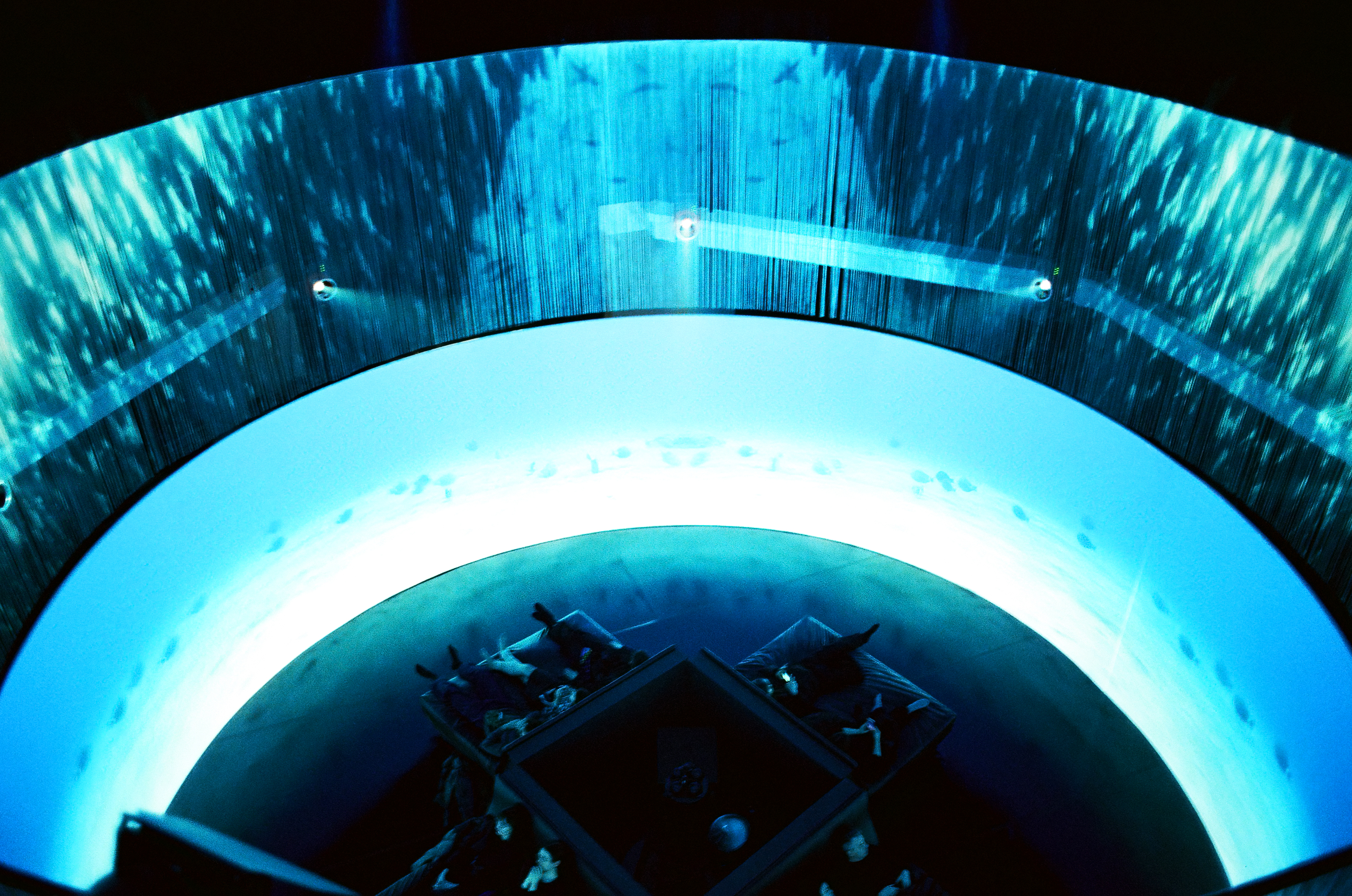
In the Corderie—a building erected in 1303 to make mooring ropes for ships—a custom textile curtain falls like water from the palladium ceiling. Together with a curved screen, it invites fifteen minutes of quiet, restful contemplation. Acting as a visual and acoustic container, the installation interrupts the Arsenale’s dense geography. Hyper-detailed videography of Oceania’s watery worlds plays while a brackish scent envelops the audience. Responsive seating encourages visitors to submerge themselves in soundscapes from Fiji’s reefs, Kiribati’s mangroves, and Papua New Guinea’s shorelines, interwoven with voices of Oceanian teachers, artists, fisherpeople, and Elders.
A counterpoint to spectacle
Amidst the sprawling techno-spectacle of the 2025 Venice Biennale, Oceanic Refractions emerges as a counterpoint of depth. This historic milestone, marking the first invitation of Indigenous, Fijian-based artists in the Biennale, was opened on May 8 with a kava ceremony during which visitors witnessed a Pacific ritual of blessing, respect, and connection.
Curated by Elise Misao Hunchuck and designed with Milan-based Studio Folder, the installation transforms a six-meter diameter circle within the Arsenale Corderie into a space where epistemology becomes a liquid archive. Blending tradition and technology, the striking wave of navy blue breaks the rooms’ horizontal totality. The column cradles the heart of the installation, offering insights for navigating contemporary conditions of ecological and social-political collapse. In the space between testimony and digital possibilities, these stories dignify Indigenous Pacific sovereignty, resisting global erasure and weaving a Pacific futurism where technology serves communities rather than surveilling or exploiting them. Oceanic Refractions demands we stop, unlearn assumptions, and reconfigure futures anchored in intergenerational ecosystemic intelligences.
![]()
![]()
![]()
Oceanic Refractions (2025). Film [15 minutes], scent, kinetic seating, curtain. AM Kanngieser, Mere Nailatikau, Laisiasa Dave Lavaki, Tumeli Tuqota, Joseph Kamaru, and Elise Misao Hunchuck with Studio Folder, OLDER Studio, and Nathan Taare.
All photographs in this announcement are by Salem Mostefaoui.
>>CTM Festival 2024>> Biennale Architettura 2025
To propose solutions to the crises we face, we must begin by listening. But how do we listen beyond words? How can we attune to the unspoken—the silences that hold meaning, the ocean that speaks in rhythms and reverberations? Oceanic Refractions invites immersion in the landscapes and seascapes of Oceania, shifting listening from an extractive act to a reciprocal practice, encouraging solidarity and interdependent ways of being with the world.
installation as interruption
In the Corderie—a building erected in 1303 to make mooring ropes for ships—a custom textile curtain falls like water from the palladium ceiling. Together with a curved screen, it invites fifteen minutes of quiet, restful contemplation. Acting as a visual and acoustic container, the installation interrupts the Arsenale’s dense geography. Hyper-detailed videography of Oceania’s watery worlds plays while a brackish scent envelops the audience. Responsive seating encourages visitors to submerge themselves in soundscapes from Fiji’s reefs, Kiribati’s mangroves, and Papua New Guinea’s shorelines, interwoven with voices of Oceanian teachers, artists, fisherpeople, and Elders.
A counterpoint to spectacle
Amidst the sprawling techno-spectacle of the 2025 Venice Biennale, Oceanic Refractions emerges as a counterpoint of depth. This historic milestone, marking the first invitation of Indigenous, Fijian-based artists in the Biennale, was opened on May 8 with a kava ceremony during which visitors witnessed a Pacific ritual of blessing, respect, and connection.
Curated by Elise Misao Hunchuck and designed with Milan-based Studio Folder, the installation transforms a six-meter diameter circle within the Arsenale Corderie into a space where epistemology becomes a liquid archive. Blending tradition and technology, the striking wave of navy blue breaks the rooms’ horizontal totality. The column cradles the heart of the installation, offering insights for navigating contemporary conditions of ecological and social-political collapse. In the space between testimony and digital possibilities, these stories dignify Indigenous Pacific sovereignty, resisting global erasure and weaving a Pacific futurism where technology serves communities rather than surveilling or exploiting them. Oceanic Refractions demands we stop, unlearn assumptions, and reconfigure futures anchored in intergenerational ecosystemic intelligences.


Oceanic Refractions (2025). Film [15 minutes], scent, kinetic seating, curtain. AM Kanngieser, Mere Nailatikau, Laisiasa Dave Lavaki, Tumeli Tuqota, Joseph Kamaru, and Elise Misao Hunchuck with Studio Folder, OLDER Studio, and Nathan Taare.
All photographs in this announcement are by Salem Mostefaoui.
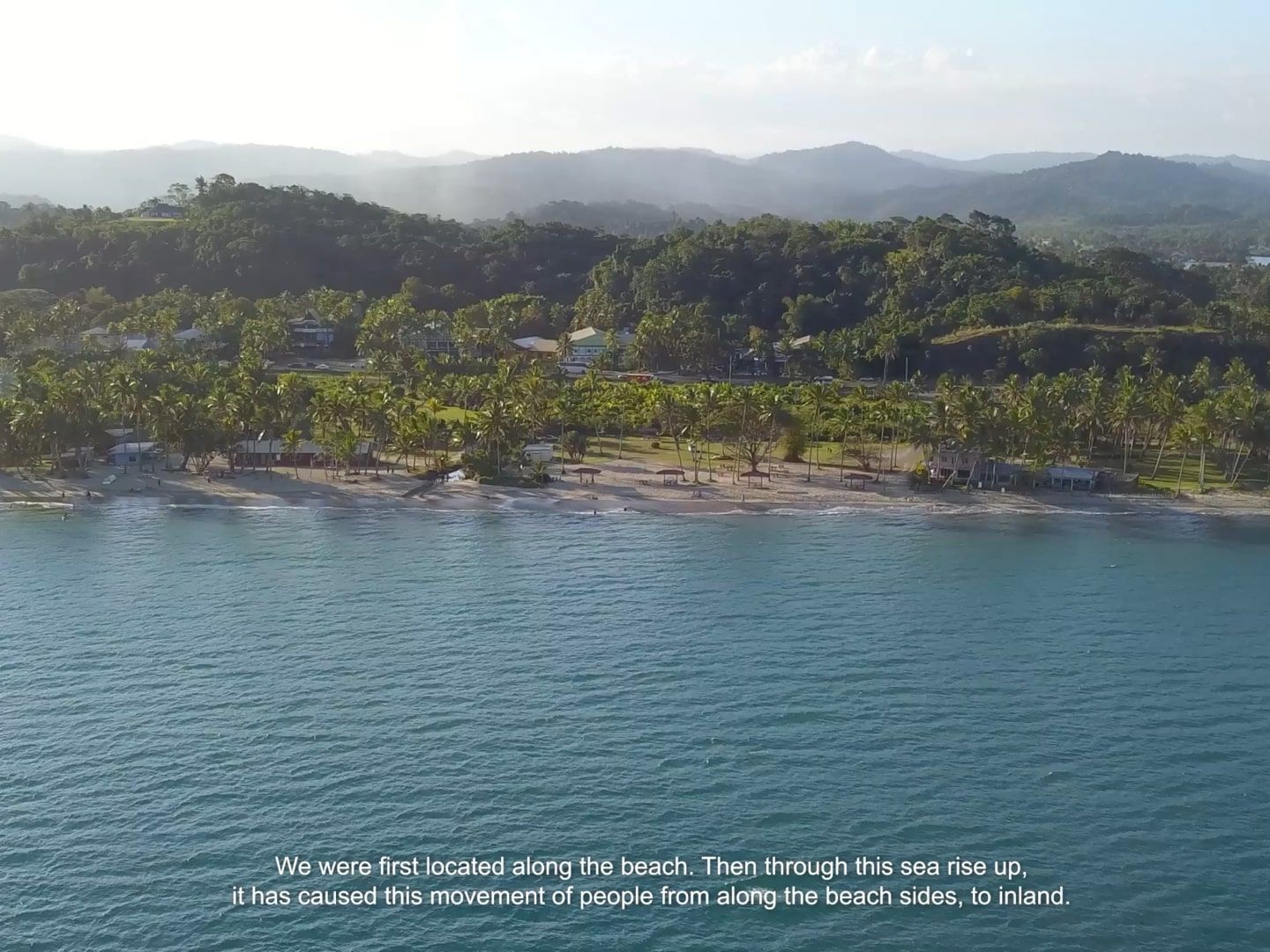
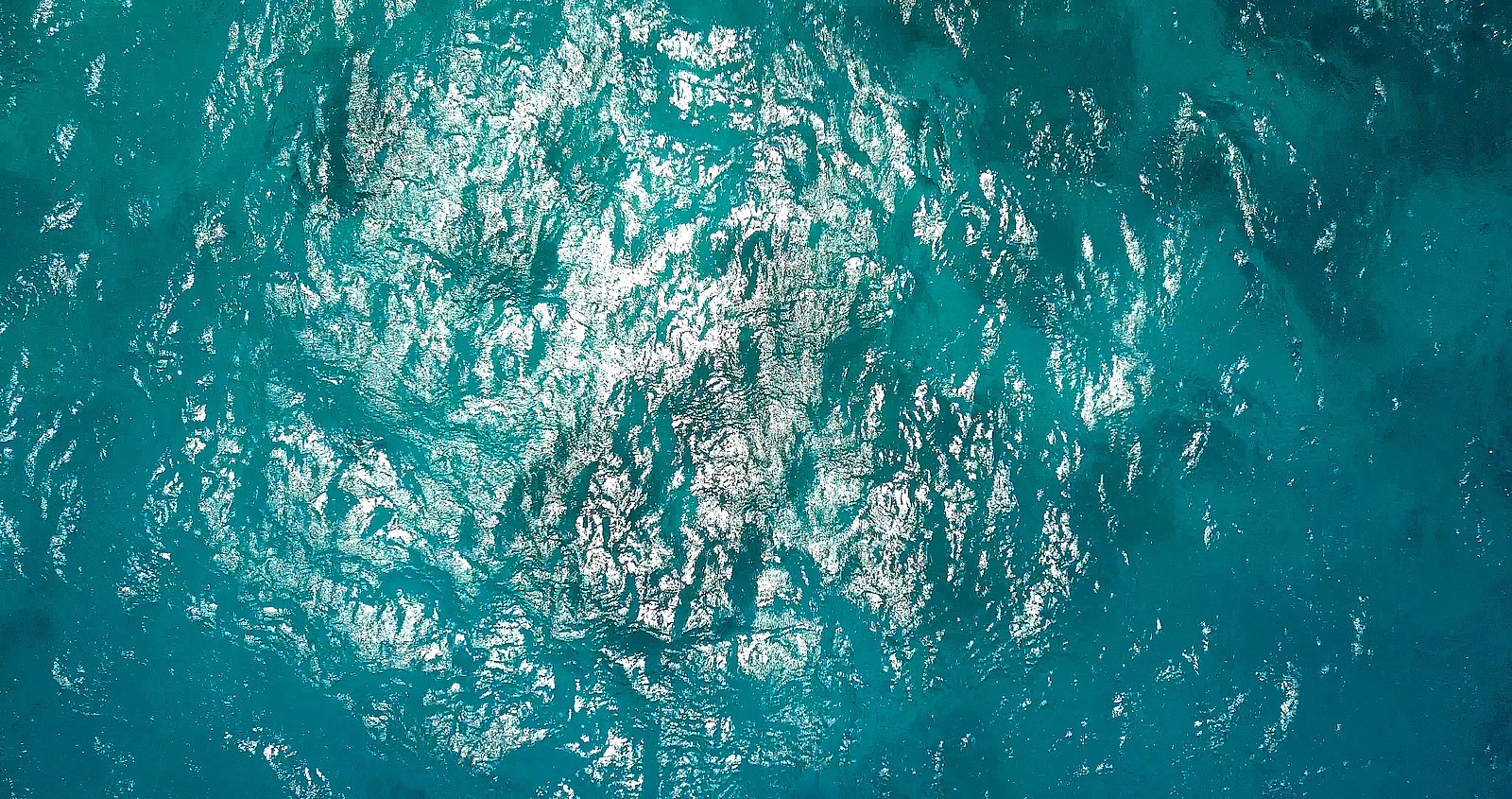
Oceanic Refractions is an immersive installation featuring testimonies of Fijian, i-Kiribati and Papua New Guinean elders on kinship, self-determination and care in the face of global ecocide. Along with reflections from these teachers, artists, fisherpeople, grandparents and chiefs, we hear field recordings of the reefs of Fiji, the oceans and mangroves of Kiribati, and the shorelines of Papua New Guinea’s Duke of York Islands.
runs: 27/1/- 4/2/2024
silent green Betonhalle
-
The result of several years of research and talanoa (dialogue) with Indigenous leaders, scholars, artists and advocates from Fiji, Kiribati, Papua New Guinea, the Marshall Islands and Nauru, the work is led and produced by artists AM Kanngieser (Australia/Germany) and Mere Nailatikau (Fiji) and who combine their expertise in climate research, education and arts (Kanngieser) and Pacific communication and international relations (Nailatikau), as they work with sound artist KMRU (Kenya/Germany), filmmakers Laisiasa Dave Lavaki (Fiji) and Tumeli Tuqota (Fiji), olfactory designer Smell Art (Australia), design and fabrication studio Space Forms (Ireland) and projection specialist Frame Works (Ireland).
The themes addressed by the installation will be further explored through talks and lectures at both CTM Festival and transmediale, as well as through specially commissioned texts featured via the festival magazines.
-
DEKOLONIALWARENLADEN
Stefan Demming in Zusammenarbeit mit KMRUMaking history perceptible is the aim of this unusual shop, a living archive and spatial installation that invites you to engage with the colonial legacy. Global and local. An acoustic search for clues begins, leading directly to the present. What does decolonisation mean? This is the question that artist Stefan Demming and musician KMRU (Joseph Kamaru) addressed. Postcolonialism does not (only) mean the liberation struggles of former colonies but also the preoccupation with the conditions of our world today whose inequality cannot be understood without knowledge of colonialism and its consequences. The DEKOLONIALWARENLADEN (DEKOLONIAL GOODS STORE) will move to the Stadthausgalerie in the centre of Münster for four days as part of the festival. Here a temporary landscape of second-hand furniture will be created – based on the furnishings of former colonial shops. It is also an audio archive that brings together the voices and contributions of people who deal with questions of (post-) colonialism from different perspectives. The DEKOLONIAL GOODS STORE is not only a speaking space but also a sounding space. The voices are connected by a composition that can be partly influenced by the visitors. It is by KMRU, continuing his sonic research into the immaterial legacy of colonialism from his project “Temporary Stored”. Finally the shop will also become a stage for readings, discussions and concerts.

A project by Stefan Demming in collaboration with KMRU
With contributions from Moustapha Diallo - Camilo Pachón - Dean Ruddock
and voices from Tina Adomako - Sister Bernard - Bibiane Benadio - Christiane Cantauw - Florian Carl - Ernest Chigozie Onu - Tahir Della - Andreas Eckl - Emmanuel Edoror - Dominic Eickhoff - Jessica Ekomane - Philipp Erdmann - Ursula Frohne - Noa K.Ha - Israel Kaunatjike - Natasha A. Kelly - Nadja Khan - Maali - Patrick Manko Lutumba Madiata - Carlos Herrera Mahoney - Mnyaka Sururu Mboro - Tatjana Niederberghaus - Barbara Rommé - Milena Täschner - Vinicius-Gifty Claresa Wiafe
Idea and Concept: Stefan Demming
Soundscape: Joseph Kamaru (KMRU)
Curator: Daniel Huhn (Filmwerkstatt Münster)
Production Management: Niklas Becker
Production Assistance and Flyer Design: Franziska Eppler
Interview Recording: Stefan Demming, Mareike Hube
Audio Processing and Editing of Interviews: Stefan Demming, Franziska Eppler, Mareike Hube, Denise Lee
Construction and Production of the Installation: Stefan Demming, Ruth Herberhold
Programming: Michael Rieken, Bent Schäfer
SOCIETY: OR INFINTE REHEARSALS
SAVVY CONTEMPORARY -14.09-01.11.2024WAI8 I & WAI8 II
2024 -2025 (ongoing), Sound Installation
A- We Move While We See
B- Condense Reminder
C- Diagonals
D- Will Still Remain
What lies within the interstices and teh inbetweens of movement and stillness? What possibilities emerge from that liminal sace of what has been and what is to come ?
Positions of liminality are brought to the surface, rendered by enveloping dissociative sounds, field recordings, and noises as actual events experienced by the body through the sonic work by KMRU. In this exhibition, we are taken on monifold journeys as invitations to experience the artists inner and physical movements through deep listening.
The Sonic Pieces resounding from different spaces in the exhibition are excerpts from WAI8, an 8hour durational performance, in which KMRU configures spatial-temporal unmappings by negotiating movement, body, time and space. This fractured timeline offers listeners the ability to dwell in the liminalities of uncertain and the possible.

(c) Nin Solis / courtesy SAVVY Contemporary.
Sensing DiverCities
Featuring: Ayami Awazuhara (chef). Mareike Bode (scent artist). KMRU (sound artist) Claudia Mock (sociologist).
Cities are places that provide – and confront – their inhabitants with endless sensory stimuli. Given cities’ dense character and the increasing diversity of the urban population, particularly in post-migrant societies, sensory experiences strongly affect how people make sense of the city, how they relate to others, and how they draw or cross boundaries to other (groups of) urban residents. Thereby, sensory stimuli, e.g. sounds, smells and tastes are experienced and interpreted differently, depending on individuals’ biographical background,their cultural embeddedness but also their corporeal sensory apparatus. To date, studies on urban diversity and urban inequality predominantly rely on the visual they mostly see’ the city, but do not listen to it, smell, taste, or touch it. However, these other senses, particularly sound, smell and taste are as relevant for experiencing and making sense of urban life, for processes of iden-tification and belonging, as well as for processes of boundary drawings and the (re-)production of urban inequality. In the past years, scholars from a variety of disciplines have increasingly addressed this lack of attention to the senses. Based on a project on the sensory experiences of urban diversities, explored within sensory walks in Berlin, our urban theory symposium and exhibition con-tribute to exploring the role of the senses for how people experience and make sense of urban diversities. We thereby focus on firstly, how urban sound, smell, and taste relate to the material and atmospheric figuration of cities, including its underlying urban planning and policymaking, secondly, the relevance of sensory practices and experiences for boundary making between different (groups of) urban residents, as well as, thirdly, methodological questions around knowledge production and reflections on knowledge transfer and the practices of sharing results to an audience that extends beyond the common confines of academic knowledge production. These practices of sharing where explored and discussed within a six month long collaboration with a chef, a sound and a scent artist, who were invited to create works within their respective profession and based on the research project’s focus on two diverse streets: Müllerstraße (Wedding) and Sonnenallee
(Neukölln). The result of this collaboration will be exhibited during the opening event of the urban theory symposium and will invite you to participate, disrupt, un/belong or simply wonder within a sensory performance of DiverCities.
-
IN HABITUS WITH
Octophonic2021 -2024(ongoing)
2024: SONIC ACTS, amsterdam, NL
SONICA, ljubljana, SI
“in habitus with”
Every place, space, human-nonhuman sounds and resounds. We live in a hyper-localized sonic environment where there is a tendency to mask seemingly unimportant life sounds. These sounds are ignored. Every living and non-living is a participant in the soundscape, a sonic- social being.